Tiny Plants, Giant Flavour: The Microgreen Revolution

Marion Boulter
Head of Nutrition and Food
- Nutrition
- Freshness
Microgreens are the small secret to enriching your daily diet. Growing food no longer requires a backyard or months of patience. You can harvest vibrant, restaurant quality ingredients in just over a week. Welcome to the world of microgreens tiny edible powerhouses moving out of fine dining and into everyone's kitchens.
Imagine growing fresh food without a garden or months of waiting. Microgreens can be grown indoors and, depending on the variety and growing conditions, many can be ready to harvest within a matter of days. Once associated primarily with restaurant kitchens, these young edible plants are increasingly finding a place in everyday meals.
What Are Microgreens?
Microgreens are young edible seedlings of vegetables, herbs and other plants, typically harvested after the cotyledon leaves have developed and around the time the first true leaves begin to emerge.
This early stage of plant development is nutritionally interesting. The young seedling draws on reserves stored within the seed while establishing its own photosynthetic growth. As a result, microgreens can contain significant concentrations of vitamins, minerals, carotenoids and other naturally occurring plant compounds.
Importantly, their nutritional composition varies considerably according to the plant species, growing conditions and point of harvest. There is no single nutritional profile that applies to all microgreens.
What Does the Science Tell Us?
One of the most frequently cited studies into microgreen nutrition was conducted by researchers from the University of Maryland and the US Department of Agriculture. Researchers analysed 25 commercially available microgreens for concentrations of several vitamins and carotenoids.
The study found substantial variation between different microgreens, but reported that concentrations of the nutrients measured were generally higher in the young leaves than published values for their mature counterparts, in some cases by several times.
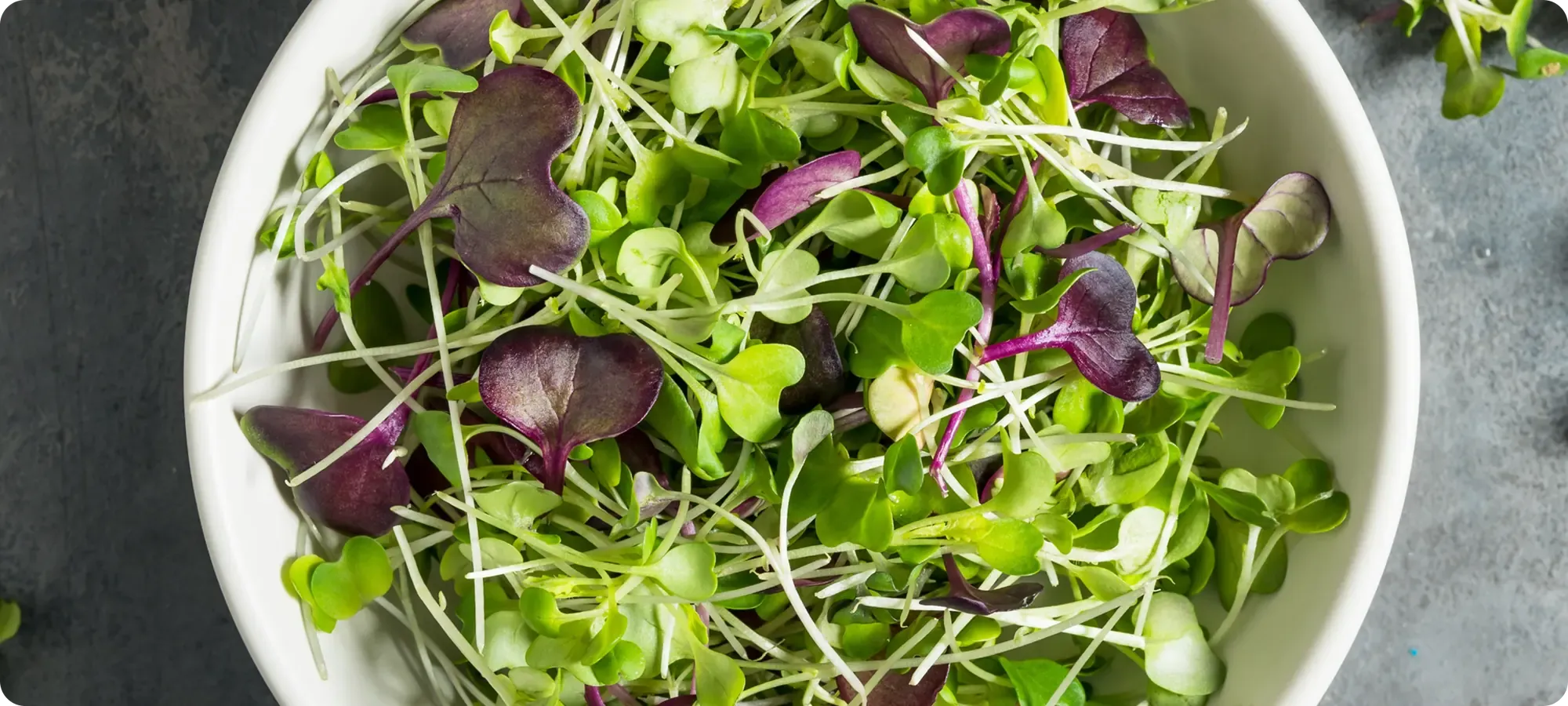
This helps explain why microgreens have attracted increasing scientific interest. Different varieties also provide different nutritional profiles. Brassica microgreens, such as radish, mustard and broccoli, are of particular interest because they contain naturally occurring glucosinolates and related phytochemicals, while other varieties can contribute carotenoids, polyphenols, vitamins and minerals.
Rather than thinking of microgreens as a nutritional shortcut, their real strength is in adding another source of fresh plants and greater diversity to a balanced diet.
Home Harvest: Freshness in Eight to Ten Days
At Home Harvest, varieties such as rocket, radish and mustard can develop from seed to harvest in approximately eight to ten days under suitable growing conditions. Growing this close to the point of consumption offers another important advantage: freshness.
Once fresh produce is harvested, its nutritional composition can change during storage and distribution. The extent of those changes depends on the nutrient, crop, temperature, light exposure and storage conditions. Growing at home significantly shortens the journey between harvest and plate, allowing microgreens to be picked when they are needed rather than travelling through a conventional supply chain.
It also makes adding fresh plants to everyday food remarkably simple. A handful of rocket can be harvested for a sandwich or salad, radish can add crunch and peppery flavour to a meal, and fresh mint can be picked when it is needed.
Small Plants, Greater Variety
Good nutrition is not determined by a single ingredient. It comes from the overall quality and diversity of our diet.
Microgreens provide a practical way to introduce a wider variety of plants into everyday meals. Different colours, flavours and plant families bring different combinations of nutrients and phytochemicals, making variety an important part of their nutritional appeal.
For Home Harvest, that is where growing and nutrition come together. Growing food at home is not about replacing vegetables, fruit or other important foods. It is about making fresh, diverse plant foods easier to see, harvest and add to the meals we already eat.
The science of microgreens starts with something remarkably simple: a seed, a young plant and a harvest just moments from the plate.
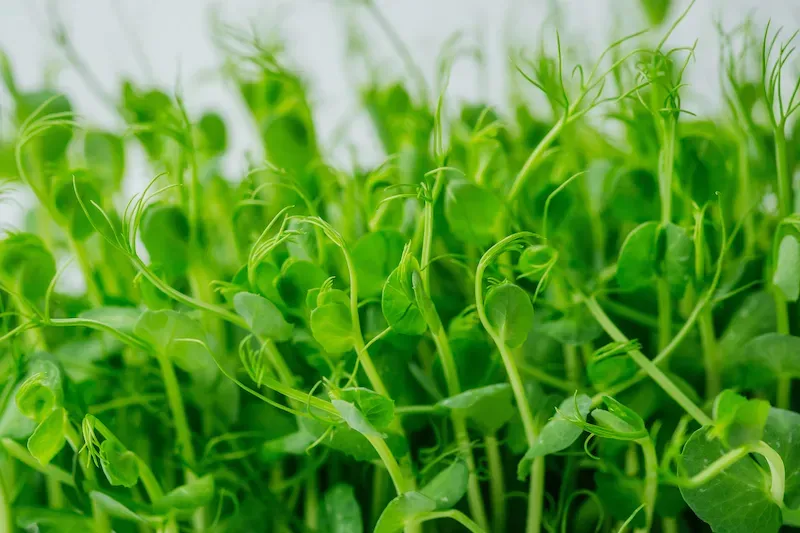
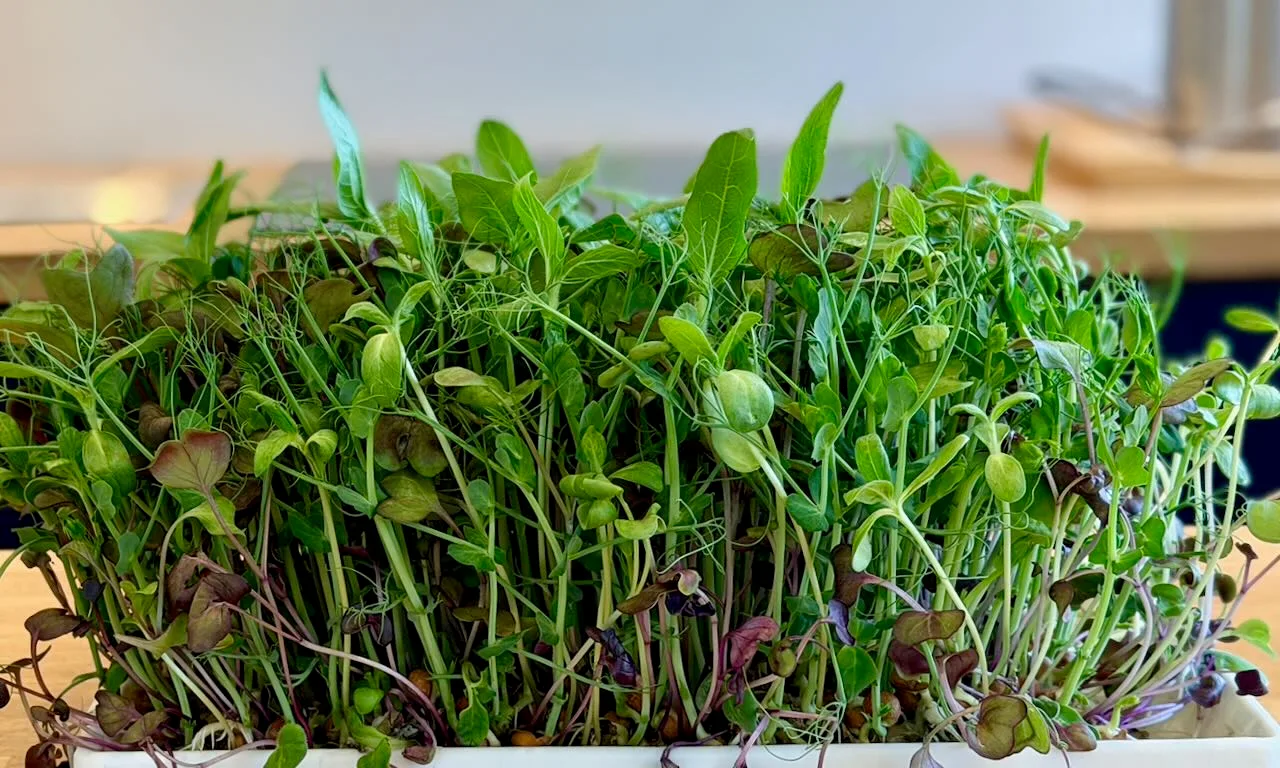
Pea shoots growing in a harvester
Day 8 of pea shoots growing
The Future of Eating Smarter
As a nutritionist, I believe wellness starts with what is visible and available. Microgreens represent a "grow smarter" philosophy bringing living ingredients directly into your kitchen. They remind us that nutrition doesn’t have to be complicated. Perhaps it can be as simple as a tray of living greens in your Home Harvest Harvester and the joy of harvesting your own microgreens moments before they reach your plate.