The Secret to A Happy Gut

Marion Boulter
Head of Nutrition and Food
- Freshness
- Gut Microbiome Diversity
- Why Diversity Matters
- Why Microgreens Make 30 Easier
It isn't a superfood, a supplement or a strict diet. It's a number. And it could change how you shop, cook and eat this week.
Let me explain why the number 30 keeps coming up in nutrition research, and why it's easier to reach than it sounds.
At a Glance
- The idea behind 30 plants a week is variety, not a single "superfood".
- The American Gut Project found that people who ate more than 30 different plant types a week had more diverse gut microbiomes than those who ate 10 or fewer.
- It's about progress, not perfection. Every new plant counts.
- Microgreens and herbs are a simple way to add more plants to your week.
Where the Number 30 Comes From
The number comes from the American Gut Project, a large citizen science study that began in 2012 as a collaboration between the Earth Microbiome Project and the Human Food Project. More than 10,000 people took part, mostly from the United States, United Kingdom and Australia, sharing details of their diet alongside a sample for microbiome analysis.
When the researchers looked at the results, one pattern stood out. Participants who ate more than 30 different plant types a week had more diverse gut microbiomes than those who ate 10 or fewer. This held whether people described themselves as vegan, vegetarian or omnivore.
It's worth being clear about what this tells us. It's an observational study, so it shows a link, not a cause, and the 30 versus 10 plants comparison involved two smaller groups of 41 and 44 people. The researchers themselves said they don't yet know whether increasing someone's microbial diversity would directly improve their health. What it does give us is a simple, practical idea to try: eat a wider variety of plants.
Why Variety Matters
Your gut is home to trillions of microorganisms, known as your gut microbiome. Humans can't digest most dietary fibre for energy ourselves. Instead, the microbes in our gut break it down through fermentation.
Fibre isn't one single thing. Plants contain many types, including cellulose, pectin, inulin and resistant starch, alongside plant compounds such as polyphenols. Different gut bacteria produce different enzymes, so different species specialise in breaking down different fibres.
In theory, a wider range of plants gives a wider range of microbes something to work with. Researchers describe a more varied microbial community as greater diversity, a measure of how many types of microbes are present and how evenly they are spread. That is the thinking behind aiming for variety over any single food.
So why does it matter? Mostly because variety is a practical way to eat more plants, and plant-rich diets are generally linked with better health. A varied plate also brings a wider range of fibre, vitamins, minerals and plant compounds. The early research linking plant variety to a more diverse gut microbiome is promising, though scientists are still working out what it means for health.
So how do you get to 30? It's easier than you might think.
How to Reach 30 Plants a Week
Thirty is a goal to aim for, not a test. The real aim is to keep adding variety, and every new plant counts.
It's easier than you might think, because "plants" covers far more than fruit and vegetables. Whole grains, pulses, nuts, seeds, herbs, spices and microgreens all count. A single curry with onions, garlic, ginger, turmeric, cumin, coriander, chickpeas and tomatoes, served over brown rice, ticks off nine different plants in one meal.
Why Microgreens Make 30 Easier
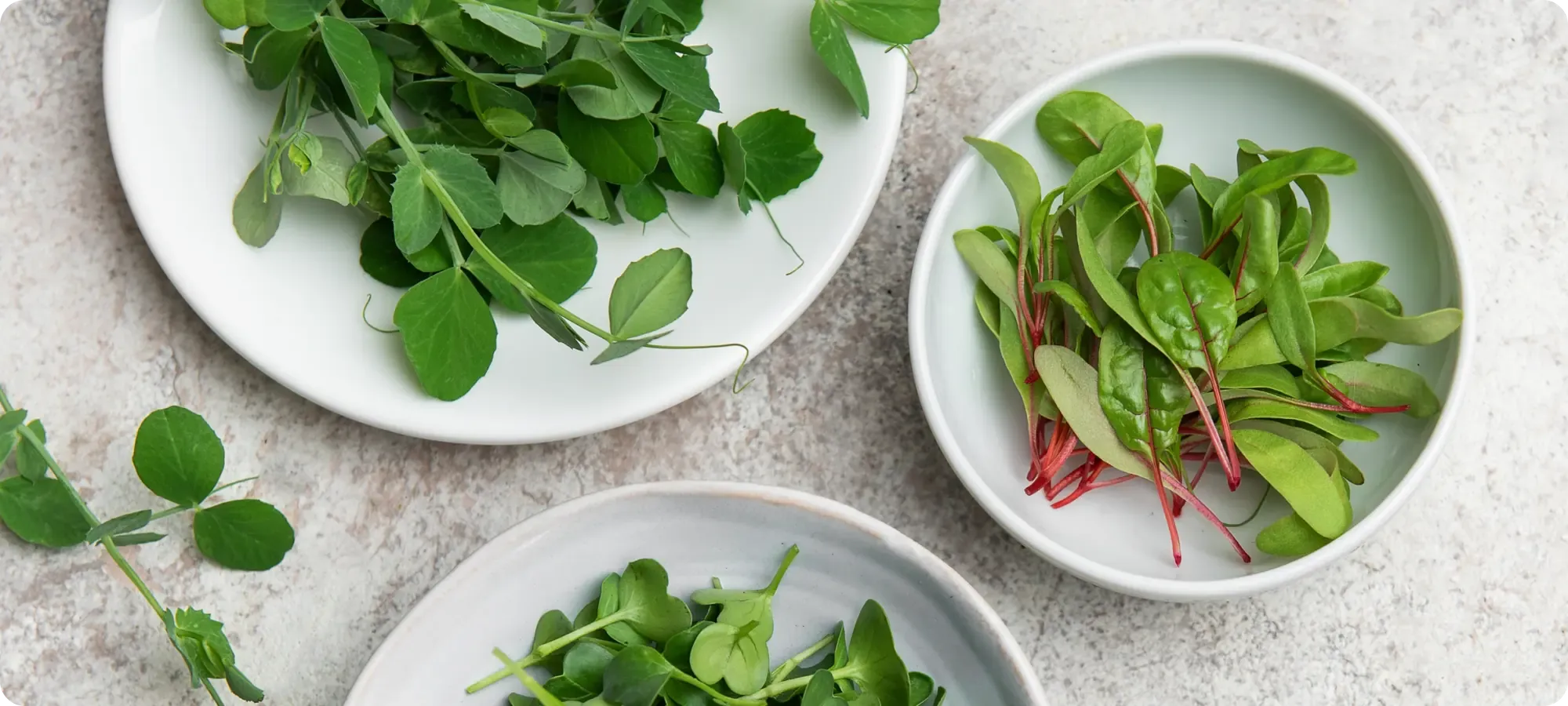
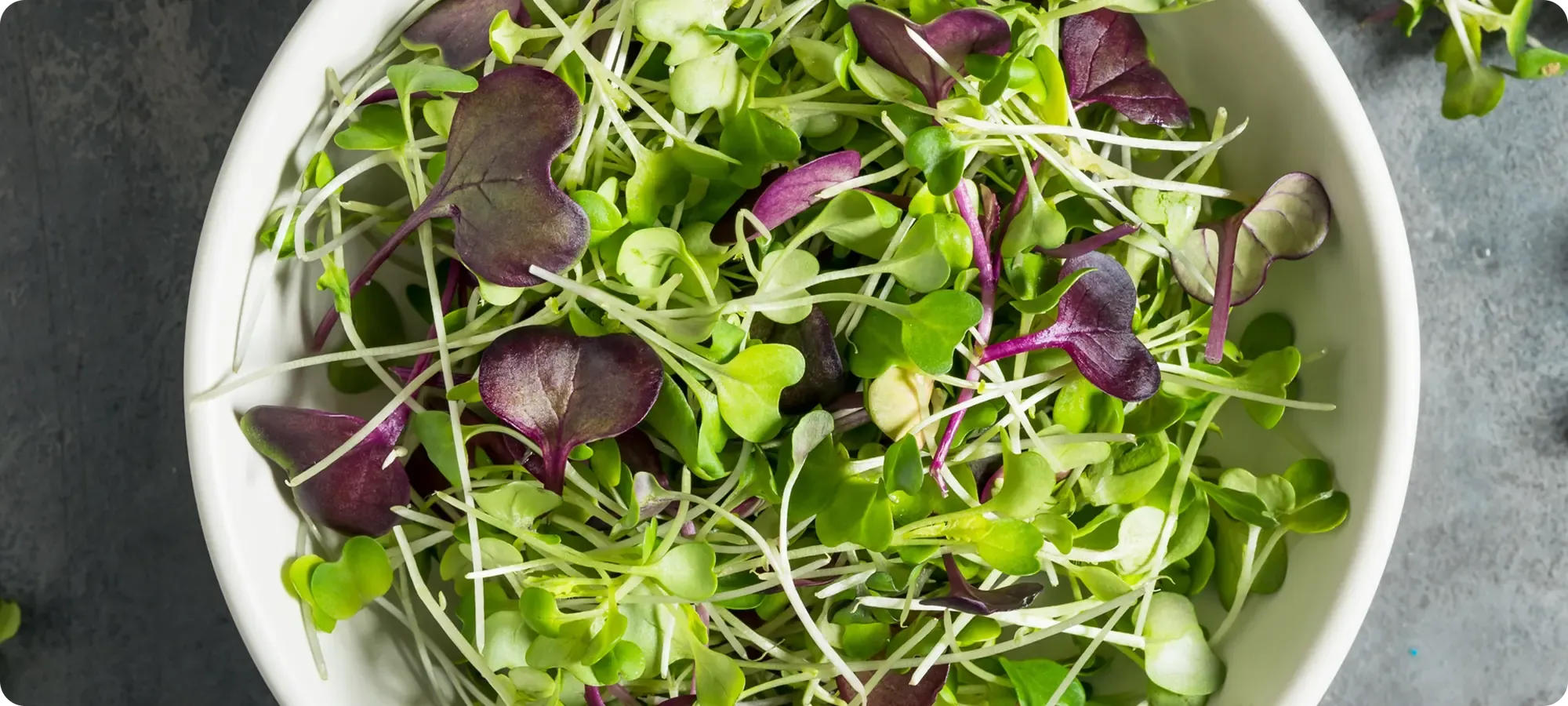
Microgreens are far more than a garnish. These young greens can be stirred, blended or folded into the meals you already make. Stir a handful into a dhal, blend them into a soup or smoothie, or toss them through a fresh salad, and your plant count goes up straight away.
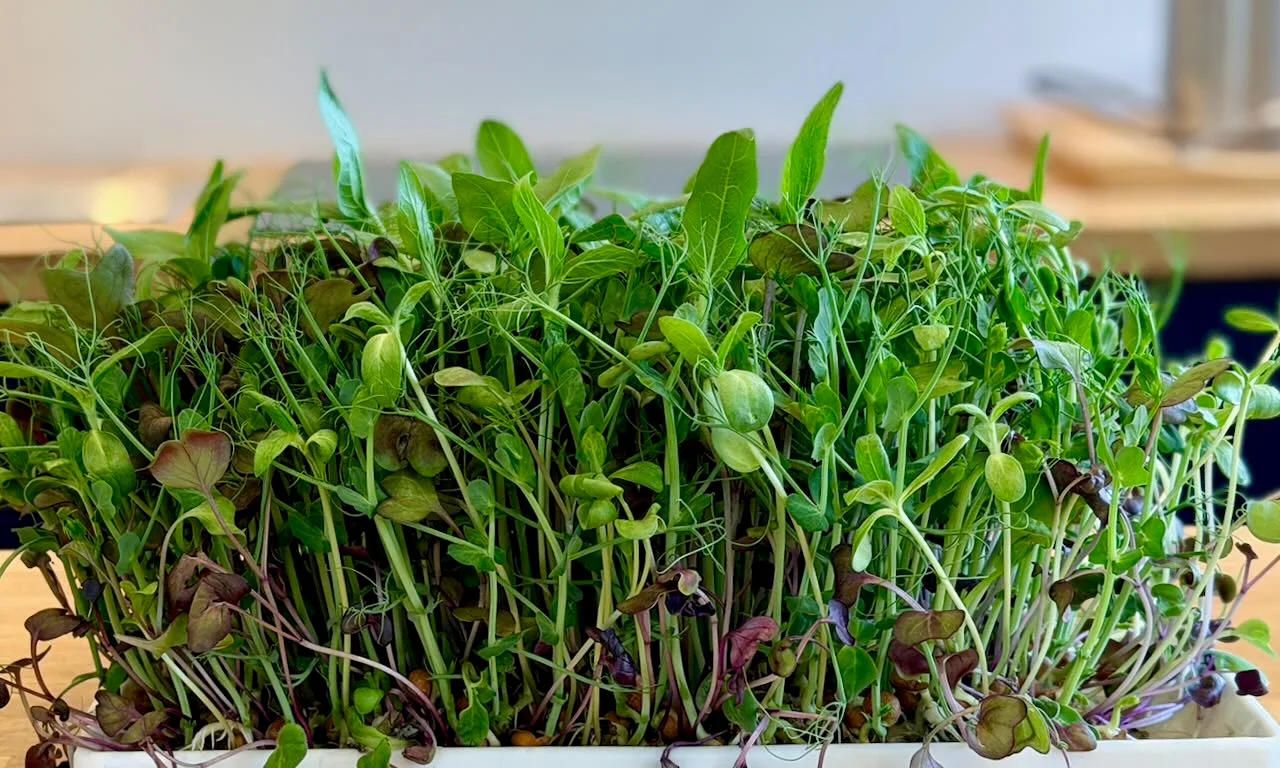
Every different variety counts as its own plant, and one of our signature blend seed mats gives you several in one harvest.
Imagine snipping a fresh handful of microgreens from your countertop, grown in just 8 to 10 days. The Home Harvest Harvester takes care of the watering, lighting, temperature and humidity, so adding more plants to your week is as simple as cutting what you need and letting the rest keep growing.
Growing Variety with Home Harvest Blends
We are developing our signature blends to make variety simple and delicious. Here are a few of them:
- Home Harvest Variety Blend: a daily blend of microgreens, and a simple way to bring a wider variety of plants to your plate.
- Fields of Verona: rustic Italian flavours rooted in the sun-drenched fields of northern Italy.
- Taste of Tokyo: Asian-inspired tastes and flavours to bring life to your dishes.
- English Country Garden: delicate, aromatic herbs and vibrant greens inspired by classic British kitchen gardens.
- Power Mat Junior: grown with children in mind, a mix of pea shoots, sunflower, borage and radish that's mild enough for little ones and, more importantly, actually gets eaten.
- Mama's Mix: a gentle mix of broccoli, green cabbage, kale, bull's blood beet and mizuna.
Each blend is a convenient way to add variety to your week, without any extra prep in the kitchen.
How Many Plants Did You Eat This Week?
Over the coming week, take a moment to notice what you're eating. How many different plants make it onto your plate? Vegetables, fruit, whole grains, pulses, nuts, seeds, herbs, spices and microgreens all count.
If you're short of 30, a handful of microgreens is the easiest place to start.
Reserve your Harvester today
Save up to $250 / £180 at launch in 10 DAYS TIME with a $10 / £8 Deposit
Reference: McDonald D, et al. American Gut: an Open Platform for Citizen Science Microbiome Research. mSystems. 2018. DOI: 10.1128/mSystems.00031-18